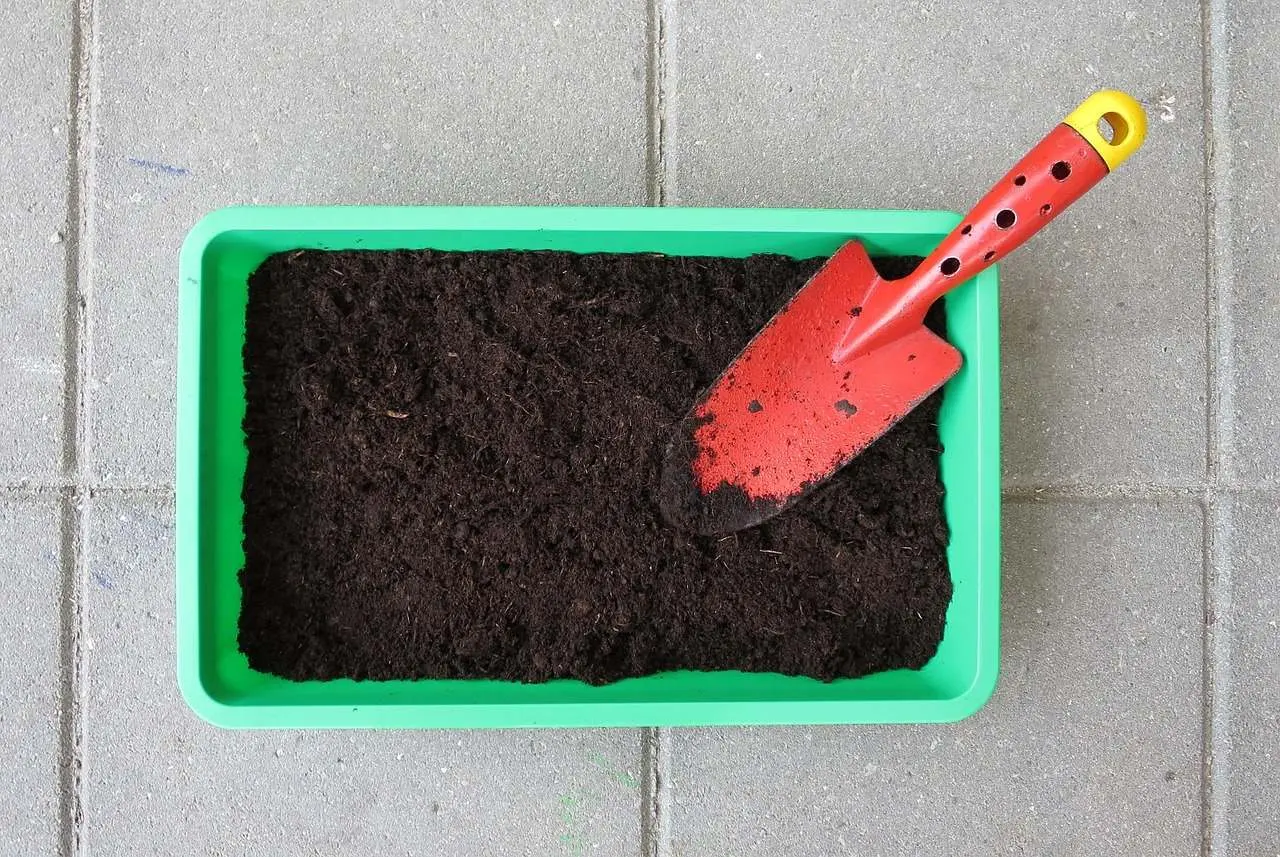
Standing in the garden-center aisle surrounded by bags is confusing. The best potting mix for vegetables is a light, fluffy, peat- or coir-based blend that drains well, not garden soil or heavy black bagged “soil”.
This page is one piece of the wider topic of container vegetable gardening, focused on what goes inside the pot.
| Item | Value |
|---|---|
| Pore space in excellent in-ground soil | Roughly 50% pores |
| Pore space in many high-quality potting media | Roughly 85% pores |
| Typical pH of a commercial soilless mix | About 6.2 |
| Soil pH range where vegetables generally grow best | 5.5-7.0 |
| Topsoil share in very large containers | No more than 10% of the volume |
The figures come from Iowa State University Extension’s potting media article and University of Maryland Extension’s growing media guide. They can change, so check the sources before you rely on them.
Why garden soil does not work in pots
Soil that performs well in a bed behaves differently once it is dug up and boxed into a pot. Iowa State Extension says garden soil compacts when placed in a container, which gives poor water drainage and aeration. It also pulls away from the inside of the container as it dries, which makes proper watering difficult, according to the same extension service.
Depth is part of the reason, because the lack of depth in a container can deter drainage. Excellent in-ground soil is roughly 50% pores, while many high-quality potting media are roughly 85% pores, as Iowa State’s potting media article explains.
UNH Extension adds that garden soil can quickly become compacted and waterlogged, which reduces air space around the roots. Garden soil can also carry weed seeds, insects and diseases if it has not been pasteurized. Air space is described there as one of the most critical aspects of a potting mix, as set out in UNH’s guide to potted-plant soil.
What a good potting mix for vegetables is made of
Most bagged mixes are soilless: no field soil, just a blend of lightweight ingredients. University of Maryland Extension calls commercial soilless mixes an excellent choice for containers, and lists sphagnum peat moss, perlite, vermiculite, composted bark, compost and coconut coir as typical ingredients, with small amounts of lime and fertilizer, in its growing media guide.
Each ingredient has a job:
- Peat moss: the traditional base, which retains moisture without becoming waterlogged and does not compress easily.
- Coir: a coconut-husk fiber sometimes used in place of peat, which also holds water without turning soggy.
- Perlite: puffed volcanic rock that provides long-lasting air-filled pores.
- Vermiculite: a spongy material that holds water and keeps fertilizer available to roots for longer.
- Composted bark: good aeration, though it dries out faster than peat and needs more frequent watering.
- Compost: added nutrients, but UNH Extension says it should make up no more than 1/3 of a potting mix.
Not every ingredient earns its place. Iowa State says vermiculite is likely unnecessary with a high-quality mix and a good nutrition program. The same source warns against using bark mulch in potting media because it has not been processed, and Maryland Extension does not recommend bark fines for container vegetables (Iowa State, Maryland).
How to read a bag before you buy
Quality varies considerably between brands. Poor mixes are often inexpensive, black, heavy and slow to drain, while high-quality mixes are lightweight, well drained, free of plant disease organisms and weed seeds, and slow to compact, per Iowa State Extension.
Run through this quick check in the aisle:
- Lift the bag. Maryland Extension advises avoiding mixes that feel heavy or gritty, have very fine particles, appear clumped or contain sedge peat.
- Read the ingredients. UNH Extension says quality mixes contain peat, coir, bark, perlite or vermiculite.
- Skip bags that are compost-based or seem overly heavy, since they may not give roots enough air space.
- Be wary of bags sold as topsoil, planting soil or planting mix, which vary a great deal in composition and quality.
- Check the label for fertilizer, which some mixes include.
Those points come from Maryland Extension and UNH Extension. Knowing what is in the bag is key to deciding whether it suits the plants you want to grow.
Commercial soilless mixes have a pH of about 6.2, while vegetables generally grow best when soil pH is in the 5.5-7.0 range, according to University of Maryland Extension. That puts a typical bagged mix inside the range.
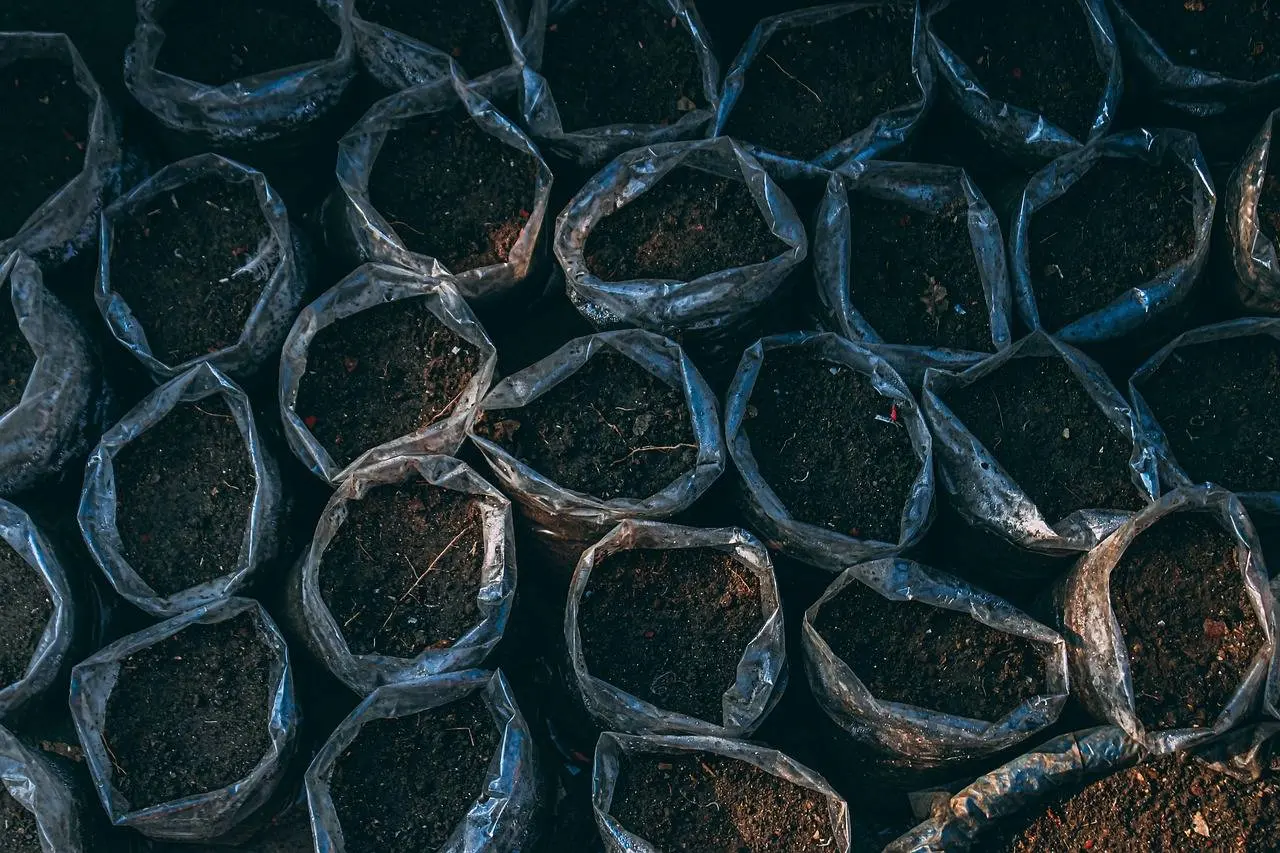
Once the mix is chosen, match it to a pot using the guide to container size for vegetables.
Can you make your own potting mix?
Yes, and sources give slightly different recipes. Iowa State Extension describes a homemade mix of equal volumes of garden soil, sphagnum peat moss and perlite. UNH Extension suggests choosing a peat-based general-purpose mix when in doubt, or combining the ingredients yourself and adjusting the ratios to your plants (Iowa State, UNH).
Advice on compost also differs. Maryland Extension notes that vegetables, herbs and flowers can be grown successfully in 100% compost or leaf mold, while UNH keeps compost to a smaller share of the mix. Iowa State points out that compost varies based on its source, so a bag you trust matters (Maryland, Iowa State).
If you add topsoil, Maryland Extension says to use it only in very large containers and not above 10% of the volume. Sand, if used, should be coarse builder sand rather than play sand, per the same Maryland guide. Iowa State adds that sand aerates less well in a container but can supply ballast for tall crops.
Watering, feeding and reusing your mix
Dry soilless mix tends to repel water. Maryland Extension suggests working water into the mix with your hands, ideally gloved, until it is thoroughly wetted, as described in its growing media guide.
Starter nutrients do not last. UNH Extension notes that the initial fertilizer in a bagged mix is eventually exhausted, after which potted plants need additional fertilizer, and Maryland Extension says compost-fed containers still need feeding because compost releases nutrients slowly. Follow the product label and local extension guidance for whatever you choose (UNH, Maryland).
To save money, empty each pot at season’s end, remove plant residue and tags, and store the mix. Soilless mix and compost lose nutrients and break down over time, so Maryland Extension recommends blending last year’s mix 50:50 with fresh mix or compost, and not keeping it at all if root diseases were a problem, per its guide.
Because good mix is lightweight for handling, it suits a balcony vegetable garden as well as a back step.
Frequently asked questions
Can I fill a container with garden soil?
Show answer
Not on its own. Dense soil holds water in small pore spaces and can drown roots, especially in shallow pots, according to Maryland Extension. If you add any, keep it to a small share of a very large pot.
Is potting soil the same as potting mix?
Show answer
Not necessarily. Products labelled topsoil, planting soil or potting soil vary widely in quality, while true potting mixes, also called soilless mixes, are made for potted plants (Maryland, UNH).
Do vegetables need a special mix?
Show answer
Usually a general potting mix is enough. UNH Extension says general mixes work fine for most annuals and vegetables in containers, whereas orchids, succulents and cacti may need a drier specialty blend, as noted in its potted-plant soil guide.
Are water-storing crystals worth it?
Show answer
They may help for a while. Moisture-retaining treatments are meant to reduce how often you water, but their effect fades and the mix eventually dries like any other, per UNH Extension.