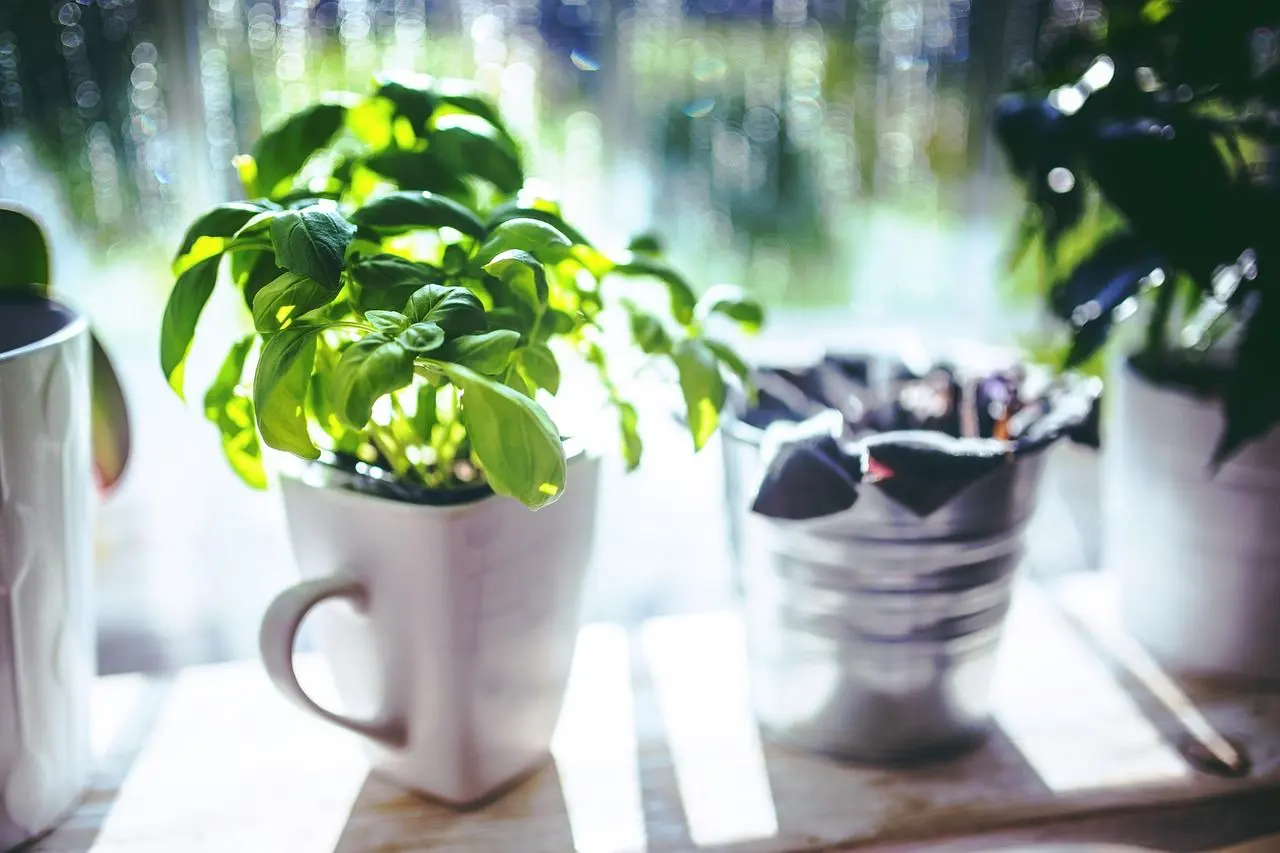
If you want fresh basil or chives without a garden, growing herbs on a windowsill can work well. Give them around eight hours of direct light, a pot that drains and soil that dries between waterings.
For the bigger picture on pots, soil and space, see the guide to container vegetable gardening.
| Item | Value |
|---|---|
| Direct light most herbs need indoors | Around eight hours a day |
| Least direct light some herbs tolerate | As little as six hours a day |
| Grow light distance from the leaves | 6 to 12 inches |
| Grow light timer setting | 12 to 16 hours a day |
| Pot width that works well | Between 4 inches and 6 inches in diameter |
| Typical indoor temperature for herbs | 65 to 70 degrees Fahrenheit |
The light, grow-light and pot-size figures come from Iowa State University Extension (page last reviewed November 2023), and the pot width and temperature come from Hunker. Figures can change and sources differ, so check the source before you rely on them.
Which herbs suit a windowsill best?
Iowa State University Extension lists parsley, mint, chives, basil, oregano, cilantro and thyme as the best herbs to start with. They cope with the lower light, low humidity and cooler temperatures found indoors, according to that extension page.
Rosemary, sage, lemon balm, marjoram, chervil and bay laurel are the next group to try. The same page notes they either need more light than usual or attract pests such as spider mites indoors, so treat them as a second step.
Choose herbs you will really cook with, and favor ones with similar needs. Hunker’s beginner guide suggests trimming your wish list to herbs that share more or less the same cultural requirements.
Three ways to get started
- Garden center starts: small plants save time and are easy to pot up.
- Seed: slower to reach a usable size, but often cheaper than buying plants.
- Cuttings: snipped from outdoor basil, mint, sage or oregano before they die back for winter.
The three options above draw on Hunker and on Purdue Extension’s windowsill advice. Purdue also suggests starting seeds in a warm, bright spot away from direct sunlight, then moving seedlings to brighter, more direct light once they germinate.
Light: choosing the window and adding grow lights
Light is typically the most limiting factor for herbs indoors, says Iowa State University Extension. Most herbs need around eight hours of direct light each day, and some tolerate as little as six hours.
A south-facing sunny window is a great candidate on that same page, but a bright east or west-facing window can be good as well. Kitchen windows are not always the brightest, and Plantura points out that a windowsill in another room might even suit herbs better.
Plantura also explains that double-glazed and coated windows do not let plants receive the full spectrum of light they would get outdoors. Herbs behind glass therefore grow a little slower.
Watch the plants for signs. Hunker describes inadequate sun as leggy plants with pale or faded leaves, and it adds that herbs sit happily at typical indoor temperatures of around 65 to 70 degrees Fahrenheit. Cold winter nights near the glass and drafts from vents are the things to avoid.
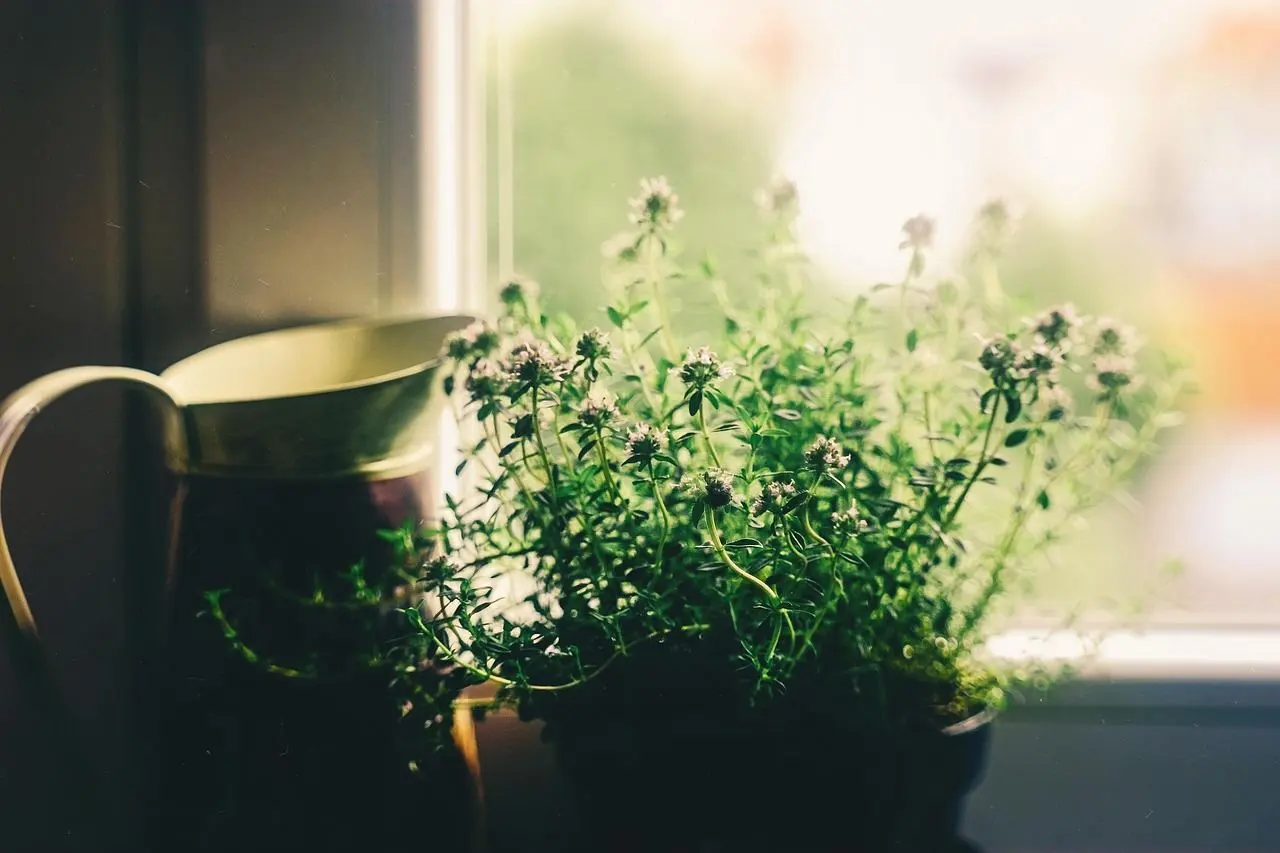
Grow-light basics
When a window cannot deliver enough, supplemental light fills the gap. Iowa State University Extension gives three pointers:
- Look for full-spectrum grow lights in high-output fixtures.
- Place the lights within 6 to 12 inches of the leaves for higher light intensities.
- Plug the light into a timer set to run for 12 to 16 hours a day.
Those steps are from the Iowa State page. A timer also removes the daily chore of switching the light on and off.
Pots, drainage and potting mix
Drainage matters more than the look of the pot. Hunker calls ample drainage holes critical and recommends a saucer under each pot to keep draining water off the windowsill.
Size is a balance. Hunker says containers between 4 inches and 6 inches in diameter generally work well, while Iowa State University Extension warns that oversized containers stay wet too long.
Material is a matter of opinion. Extension guidance describes clay or terracotta pots as great options because they are porous and dry out more readily. Hunker notes that some experts avoid clay in winter, when heaters already dry the air.
Fill the pot with a quality potting mix, not soil from the yard. Purdue Extension says garden soil is generally too heavy for potted plants and may carry diseases and insects, and Hunker adds that it compacts all too easily.
Give each herb its own container. Iowa State University Extension finds it difficult to create the best growing conditions for several species in a single pot.
Watering and feeding without drowning your herbs
Most herbs do not tolerate wet soil, so let the soil dry between waterings, per Iowa State University Extension. Purdue Extension’s method is to apply enough water that some runs out of the bottom of the container, then let the pots dry a little before the next watering.
The cost of overwatering is real: Hunker warns that roots in water-saturated soil will very likely rot and kill the plants. For a wider look at the technique, read about how to water container plants.
Feeding is light work. Herbs do not require as much fertilizer as other container plants, and the Iowa State page advises fertilizing from early spring through summer and avoiding it in winter. Follow the product label and your local extension guidance for the product you choose.
Light also shapes flavor. Purdue Extension explains that herbs make the oils behind their flavor best in sunny conditions, which is one more reason to give them the brightest spot you have.
Harvesting and keeping plants productive
Harvest indoor herbs as you would outdoors, snipping what the kitchen needs. For leafy annuals such as basil, chervil and parsley, Iowa State University Extension says to cut just above a leaf or pair of leaves and to leave approximately 4 to 6 inches of the stem.
Perennials such as chives, mint, oregano and thyme take a lighter touch. The same source says to remove only the top one-third of growth.
Annuals wear out. After several harvests it is best to discard old plants and start new ones from seed, according to that page.
When frost has passed in spring, tender perennials such as rosemary, bay laurel and marjoram can move outdoors, per the same extension page. A sunny balcony can take over from the windowsill, and the ideas for a balcony vegetable garden apply to herbs as well.
Frequently asked questions
How much light do herbs on a windowsill need?
Show answer
Plan for roughly eight hours of direct sun, though some herbs get by on six. If the window falls short, a timer-controlled grow light can make up the difference, as Iowa State University Extension describes.
Can you grow several herbs in one pot?
Show answer
It is possible, but it tends to disappoint, because each herb wants slightly different conditions. Extension advice from Iowa State is to keep every species in a separate container.
Will windowsill herbs taste as strong as garden herbs?
Show answer
Often not quite. Many indoor-grown herbs are less intensely flavored than outdoor ones, though basil always tastes like basil, according to Iowa State University Extension. Brighter light helps, since Purdue Extension links sunny conditions to more flavor oils.
Why are my windowsill herbs leggy and pale?
Show answer
Stretched stems and faded leaves usually point to too little sun, as Hunker describes. Move the pot to a brighter window or add a grow light.
Do windowsill herbs need a special mint or basil mix?
Show answer
Not necessarily. A quality potting mix with good drainage suits most herbs, and Plantura adds that mint spreads rapidly and becomes established in a pot, so give it its own container.