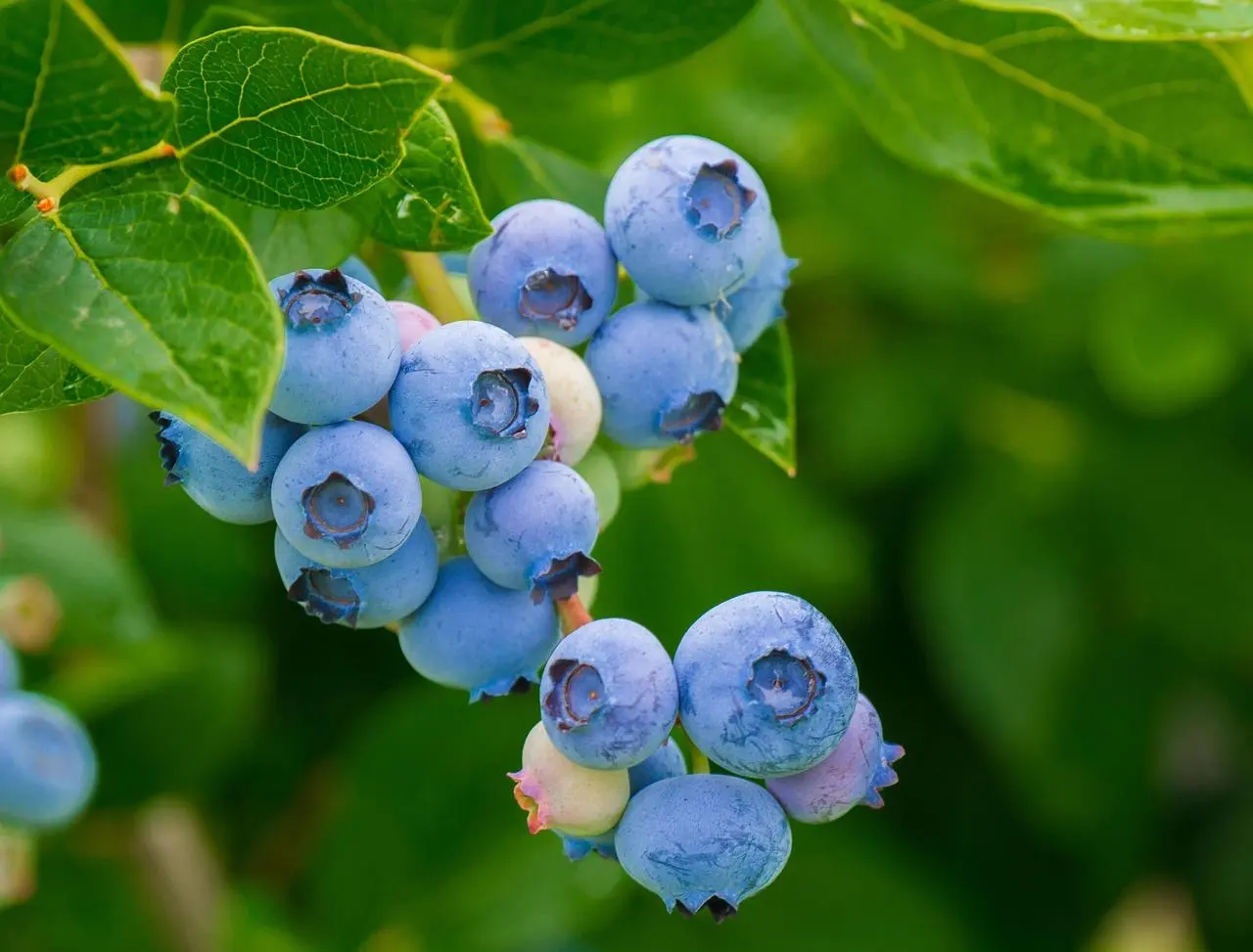
Short on garden space, or stuck with soil that’s wrong for berries? Growing blueberries in pots fixes both: give them an acidic mix, a big container and lots of sun.
If you are new to patio crops, start with our overview of container vegetable gardening, then come back here for the fruit.
| Item | Value |
|---|---|
| Sunlight | 6-8 hours of sunlight per day |
| Pot size | At least 24 inches deep and as wide |
| Soil acidity | pH of 4 to 5, with a target of 4.5 |
| Homemade mix | Equal parts peat moss and regular potting soil |
| Best plant height for pots | Less than approximately 4 feet tall |
These figures come from Epic Gardening’s container blueberry guide and its blueberry variety roundup. Guidance can change, so check the sources before you rely on them.
What potted blueberries need to thrive
Blueberry plants are a deciduous, fruiting shrub with a shallow root system, which is part of why they suit containers, according to Epic Gardening. A pot also lets you control the soil, which matters because the plant is fussy about it.
The same guide boils the needs down to three things:
- Sun: at least 6-8 hours of sunlight per day is ideal, as Epic Gardening puts it.
- Soil: acidic, loose and well-drained.
- Water: moist, but not too wet.
Partial shade is workable, but it costs you. Blueberries will grow there, yet they may be less vigorous and produce less fruit.
A second guide says the plants tolerate about four hours of sun and appreciate protection from intense afternoon rays in hot climates, as Epic Gardening’s variety roundup explains. It also asks for regular watering, because the shrubs rely on consistently moist soil for the best vigor and fruiting.
Choosing the right pot
Plan on a container at least 24 inches across and 24 inches deep for a mature shrub, per Epic Gardening. The variety roundup gives the same sizing and says it leaves plenty of room for mature roots and leafy growth above.
You do not have to buy the big pot on day one. A younger plant can live in a smaller pot and be transplanted periodically until it reaches its full size, so long as you are ready for the final move.
Whatever you choose, check these points:
- Open drainage holes in the bottom, so roots cannot become waterlogged.
- A weatherproof pot, since it will sit outside in sun, rain, heat and cold.
- Any material that is big enough, including flexible plastics, rigid resins and glazed or unglazed ceramics.
Shape does not matter: round, square or oval all work if the pot is large enough. If you want company for the berry pot on your patio, browse the best vegetables to grow in pots.
Soil mix for potted blueberries
Aim for a soil pH of 4 to 5, with 4.5 as a sensible target, as Epic Gardening’s container guide recommends. A second guide gives a slightly wider range of 4.0-5.5 for potted plants in its variety roundup.
The simplest route is a bagged acid-loving mix, commonly marketed for azaleas. Read the bag first, because some products are concentrated supplements while others are meant to be used unaltered.
To mix your own, keep a pH test kit handy and work through these steps from Epic Gardening:
- Combine equal parts peat moss and regular potting soil.
- If the mix feels very heavy, add some sand or perlite to improve drainage.
- Test the finished mix, then add amendments as necessary to raise or lower the pH, following the product label.
If you start from a mix that is not formulated for acid-lovers, the variety roundup suggests amending with pine bark fines, described as a lasting peat moss alternative, or with peat to raise acidity.
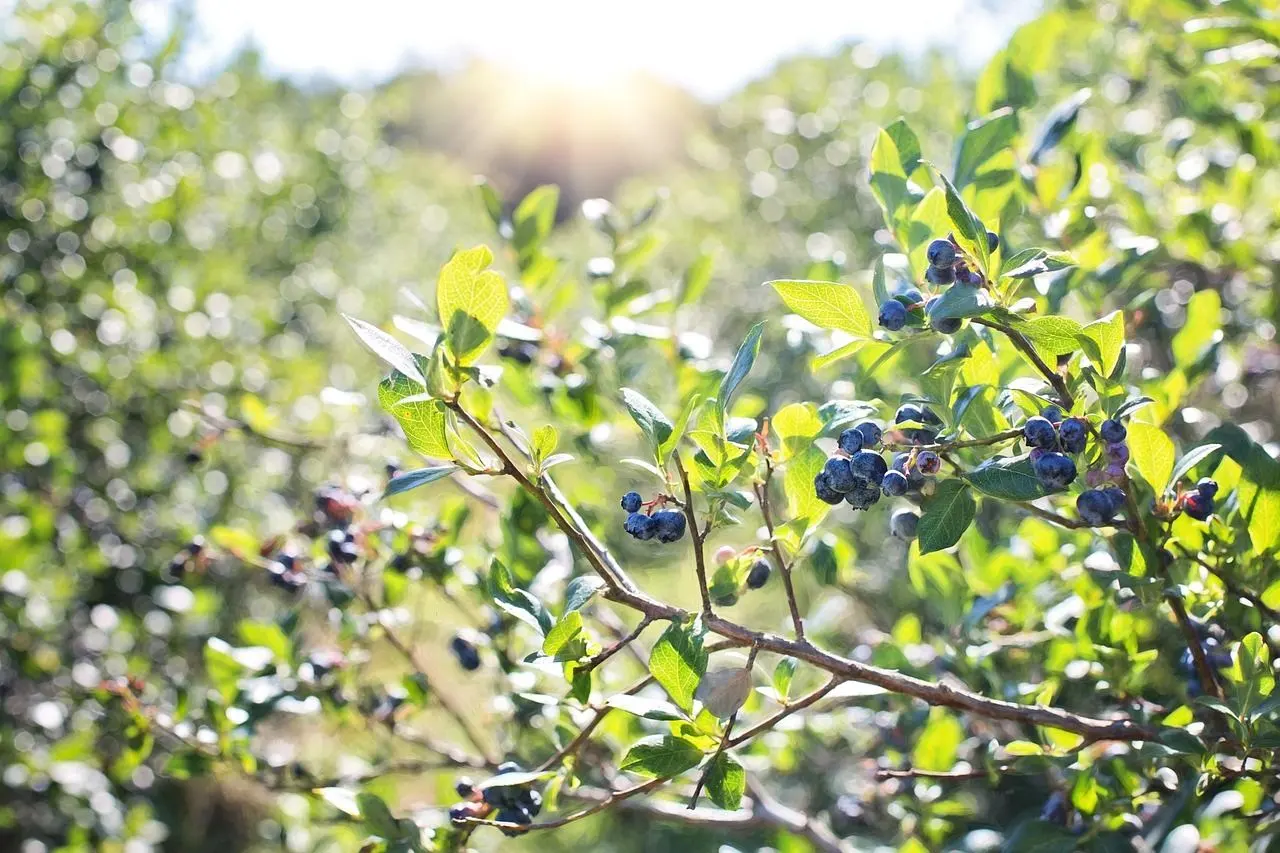
Best blueberry varieties for containers
Pick a plant that suits your climate zone first, then favor compact growers. Epic Gardening advises choosing a plant that will stay less than approximately 4 feet tall, because a very tall shrub is awkward in a pot.
These varieties come up in the guides, grouped by climate:
- Sunshine Blue: a low-chill, compact, self-pollinating plant for zones 6 to 9, per Nature Hills.
- Brightwell: a rabbiteye that, according to Nature Hills, grows best in zones 6 to 9.
- Northsky: a dwarf that thrives in cold regions and shows vibrant red fall foliage.
- Top Hat: a petite, tidy plant described as perfect for pots or edging.
- Bluecrop: a northern highbush that Nature Hills calls widely accepted as the most popular blueberry.
- Pink Lemonade: an attractive, compact potted specimen with berries that stay pink, per Epic Gardening.
The variety roundup also calls ‘Duke’ a top performer for cold climates as a hardy northern highbush.
Chill needs vary by type. Epic Gardening says southern highbush may need only about 150 chill hours, while ‘Pink Lemonade’ requires 200-300 chill hours to produce.
Pollination, feeding and winter care
Blueberries are mostly self-sterile, so cross-pollination from another cultivar that blooms at the same time helps, per Epic Gardening. Plan one shrub per pot, and add more pots if you have the space.
For feeding, fertilize in spring with a formula for acid-loving plants before new growth emerges, as the same guide advises. The shrubs are sensitive to nitrates and are not heavy feeders, so follow the product label and local extension guidance for amounts.
Winter is the main risk for pots. Containers are more susceptible to winter damage than plants in the ground, because they lack insulation from the surrounding soil mass, according to Epic Gardening.
The fix is extra protection: dig in or insulate the pots, or move them to a cool, sheltered spot away from frigid temperatures and drying winds. Nature Hills adds that, depending on how cold your climate gets, you may still need to move containers into a protected area for the winter.
Be patient. The roundup describes the plants as slow-growing, with the most yields after about five years, and calls ‘Duke’ long-lived at 50 years or more, per Epic Gardening. Tomatoes pay off faster, and the guide to growing tomatoes in containers covers them in detail.
Frequently asked questions
How big should the container be?
Show answer
Think of a tub roughly 24 inches wide and deep once the plant is mature. Epic Gardening notes that a young plant can sit in something smaller until it is moved up.
Do I need two plants to get fruit?
Show answer
Pairing two different cultivars that flower together tends to give heavier crops, according to Epic Gardening. A single self-pollinating type such as Sunshine Blue is another option, as Nature Hills describes it.
Can I use ordinary potting soil?
Show answer
Plain potting soil is not enough by itself. Epic Gardening suggests blending it with peat moss or buying a bagged mix made for acid-loving plants, then testing the result with a pH kit.
Will blueberries fruit in partial shade?
Show answer
They can grow there, but expect weaker growth and fewer berries, as Epic Gardening warns. A spot with six or more hours of full sun is the better choice, per its variety roundup.
How do I get a potted blueberry through winter?
Show answer
Give the roots a buffer, because pots lack the insulation that surrounding ground provides. Epic Gardening lists digging in, wrapping, or relocating the pot to a sheltered spot as options.