Wondering how to test garden soil without wasting money? Pull small plugs from several spots, mix them into one sample, and send a cup or two to a lab. Your local extension office can point you to one.
Testing is the first step in learning how to build healthy garden soil, because it shows what the soil needs before you add anything.
| Item | Value |
|---|---|
| Best time to sample | 3 to 6 months before planting |
| Soil plugs per area (Mississippi State) | 15 to 20 soil plugs |
| Plug depth (Mississippi State) | Top 4 to 6 inches |
| Depth for tilled garden beds (Illinois) | 6 to 10 inches |
| Amount of mixed soil to send | One to two cups |
| Area that ten subsamples can cover (Illinois) | Up to 10,000 square feet |
These figures come from Mississippi State University Extension and Illinois Extension. Labs set their own rules and guidance can change, so check the source and your lab’s instructions before you rely on them.
Why a soil test beats guessing
Illinois Extension describes a simple soil test as the road map to building healthy soil, so you only apply the nutrients your soil needs (Illinois Extension). Without one, any fertiliser or lime you buy is a guess.
The result is only as trustworthy as the sample behind it. Colorado State’s instructions state that the reliability of the results depends on the quality of the sample submitted (CSU Extension).
When your report comes back, follow the lab’s recommendations and the product label for anything you add. This guide covers sampling only, not application rates.
When is the best time to take a sample?
Mississippi State Extension says you can sample at any time of year, but 3 to 6 months before planting is ideal. That window leaves time for any recommended lime to change the soil’s pH before planting (MSU Extension).
If your report mentions acidity or alkalinity, our guide to soil pH for vegetables is a good next read.
Collecting a sample step by step
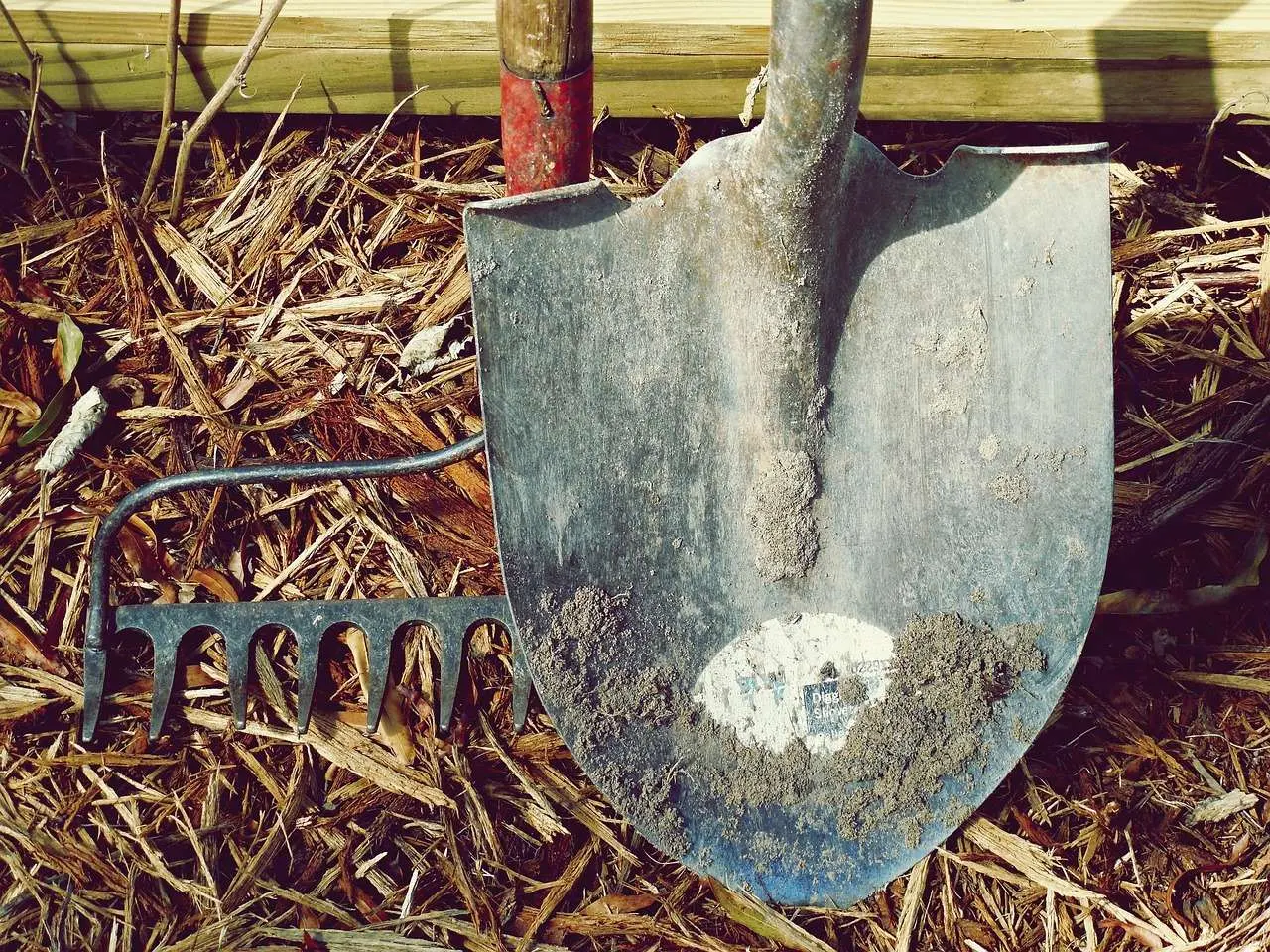
The best tool is a soil probe, and Illinois Extension notes that a garden trowel or shovel will also do the job (Illinois Extension). Mississippi State adds that probes can be borrowed from local Extension offices, and that you should avoid a metal bucket because it can skew results (MSU Extension).
- Choose one uniform area, such as a single vegetable bed.
- Clear turf, mulch and other plant material from each spot before you dig.
- Walk a zig-zag path over the area and gather a plug at each stop.
- Tip the plugs into a clean plastic bucket and mix them well.
- If the mix is wet, spread it on a paper plate to air dry. Do not heat it.
- Fill the lab’s bag or box, then label it with your name, the date and where the sample came from.
Brush mulch aside before each plug, and read more about mulch for vegetable garden beds once your sampling is done.
How many plugs and how deep?
Advice varies by lab, so treat these as examples and follow the instructions from the lab you choose:
- Illinois Extension says ten subsamples are adequate for home lawns and gardens up to 10,000 square feet, and suggests 6 to 10 inches for tilled garden beds (source).
- The University of Tennessee lab asks for approximately ten random locations, taken to a depth of 6 inches (source).
- Colorado State asks for 10 to 15 samples per area (source).
- Mississippi State asks for 15 to 20 soil plugs from the top 4 to 6 inches (source).
Keep the depth the same for every plug in a sample. Illinois Extension says the sample depth should be uniform, so pick a target depth and stick to it.
Sampling separate areas and problem spots
Illinois Extension advises against mixing lawn soil with vegetable garden soil, because the two are often managed differently (Illinois Extension). Each distinct area needs its own sample, a point Mississippi State makes as well (MSU Extension).
The University of Tennessee lab says sandy or eroded areas and problem areas should be sampled separately, provided that the area can be fertilised separately (UT Soil Lab).
A simple comparison also helps. Illinois Extension suggests sending samples from the problem area and a healthy area, then comparing the results to see whether the trouble is soil-related (Illinois Extension).
Should you test for lead and other contaminants?
If you garden in an urban or developed area, especially one built before the mid-1970s, Illinois Extension recommends testing for contaminants such as lead (Illinois Extension). Ask the lab whether it offers heavy metal testing.
This is a separate request from the routine test, so say so when you submit the sample. If results raise concerns, talk with your local extension office about next steps.
Choosing a lab and sending your sample
Start by contacting your nearest soil lab and asking about fees, special collection steps and what they test for. University labs differ in how they handle paperwork and payment.
- Mississippi State’s lab asks you to register each sample online through the Extension portal (MSU Extension).
- Colorado State’s instructions say not to include payment, because an invoice arrives with your results (CSU Extension).
- The University of Tennessee asks you to mark a sample number on the box or mailer and on the information sheet (UT Soil Lab).
Whatever the lab, make sure the sample ID on the bag matches your paperwork, and keep your own note of which bed each sample represents.
Frequently asked questions
Can I test garden soil without a soil probe?
Show answer
Yes. A trowel or shovel works: dig a V-shaped hole to sampling depth, then keep a thin slice from one side (CSU Extension). Illinois Extension also lists a garden trowel or shovel as an acceptable substitute (Illinois Extension).
What should I do if my soil is wet when I collect it?
Show answer
Let it dry on a paper plate without heating it. The University of Tennessee lab warns that wet soil can dramatically raise shipping costs and weaken shipping containers (UT Soil Lab).
Is a contaminant test worth the extra money?
Show answer
That is your call. Illinois Extension describes it as entirely optional and notes it adds considerable cost, though it may be worth it to avoid unnecessary exposure to heavy metals (Illinois Extension).
How much soil goes in the bag?
Show answer
Illinois Extension says about one to two cups of the mixed soil, in a plastic bag or the lab’s own bag (Illinois Extension). Colorado State describes two cups, roughly one pound, as enough (CSU Extension).
Who can help me read the results?
Show answer
Mississippi State says you can contact your local Extension agent, or use one of the many online fertiliser calculators (MSU Extension). Always follow the lab’s report and the product label.