Wondering how to start seeds indoors without wasting a season? Use clean containers with drainage holes, a sterile seed-starting mix, steady warmth and bright light, and sow each crop on its own schedule.
If you are new to growing food, the guide to vegetable gardening for beginners gives the bigger picture before you sow.
| Item | Value |
|---|---|
| Soil temperature for most seeds to germinate | 65 °F – 75 °F |
| Soil temperature for broccoli, cabbage and spinach | 55 °F – 65 °F |
| General seed planting depth | 2-3 times the seed’s diameter |
| Leafy greens, time indoors before transplanting | 2 to 4 weeks |
| Tomato, time indoors before transplanting | 5 to 6 weeks |
| Pepper, eggplant and onion, time indoors before transplanting | 8 to 10 weeks |
These figures come from Utah State University Extension and University of Maryland Extension. Guidance can change, so check the sources before you rely on the numbers.
Choosing containers and seed-starting mix
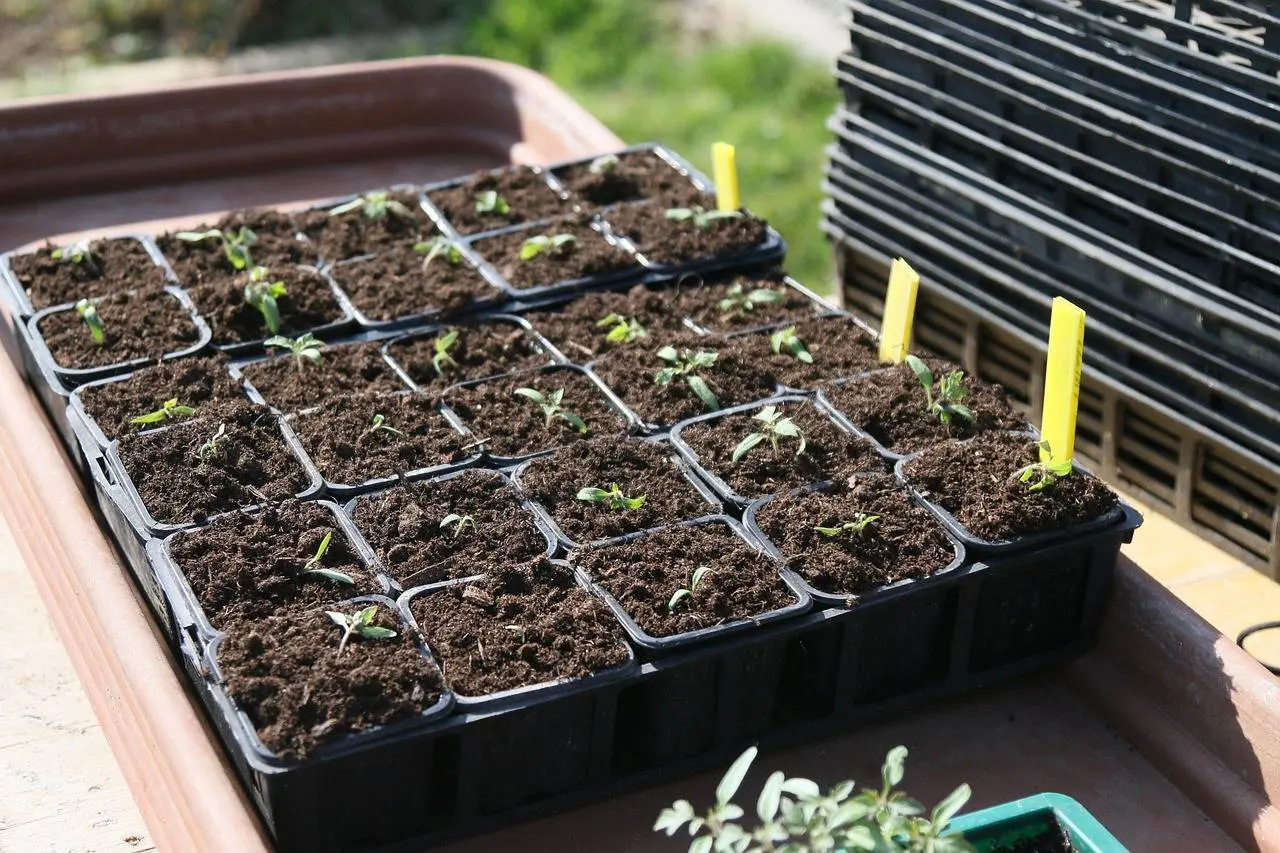
You do not need special gear. Colorado State University’s PlantTalk says seeds can start in plastic trays or cups, egg cartons and the like, or in seed starting trays and peat pots from the garden center. Whatever you pick needs drainage holes.
Common choices include:
- Plastic cell packs or flats, where each plant grows in its own cell and pops out at planting time.
- Washed household containers such as cups, tubs or egg cartons, with holes added for drainage.
- Peat pots, which are porous and can be planted whole.
- Peat pellets, set in a tray so they stay upright and are easy to water.
Purdue Extension notes that a peat pot can go into the ground whole, so there is minimal root disturbance at planting time. It also advises using pellets in trays so they are watered easily and held upright.
Purdue describes a good starting medium as loose, well-drained and fine in texture. UConn’s Home Garden Education Office adds that garden soil is not recommended, because it is not sterile and can introduce mold or disease. A bagged seed-starting mix avoids that problem.
Wet the mix before you fill containers. Utah State University Extension says it should feel like a wrung-out sponge, and that it is too wet if you can squeeze water from a handful.
When to start each crop indoors
Timing is where many beginners slip. University of Maryland Extension calls sowing too early a common mistake, because it produces tall, root-bound plants that do not perform well in the garden.
Two rules of thumb help. CSU PlantTalk says most seeds are generally started four to eight weeks before the last killing frost, and Iowa State University Extension tells you to consult the package for how early to start the seed.
| Crop group | Time to grow indoors before moving outside |
|---|---|
| Leafy greens | 2 to 4 weeks |
| Cabbage, broccoli and cauliflower | 4 to 6 weeks |
| Cucumber, squash and melons | 3 to 5 weeks |
| Tomato | 5 to 6 weeks |
| Pepper, eggplant and onion | 8 to 10 weeks |
The ranges above are from University of Maryland Extension. They can change, so check the source before you rely on them.
Maryland Extension says cool-season crops that must mature before summer heat stress benefit from an early indoor start. Warm-season crops such as tomato, pepper and eggplant may not have time to produce a harvest if you sow them directly outdoors.
Sowing seeds step by step
USU Extension gives a general rule of planting at a depth of 2-3 times the seed’s diameter, with exceptions. In an open flat it suggests spacing rows 1-2 inches apart.
- Fill clean containers with pre-moistened mix, then tap them on the table to settle it.
- Label a tag with the crop, variety and planting date before you sow.
- Press a slight indent into each cell with a pencil or finger, drop in the seeds and cover them to the right depth.
- Press lightly so each seed makes good contact with the mix.
- Water gently, then move the container to its warm, lit spot.
Bottom watering works when the container has drainage holes, because the mix wicks water up through them. If the top layer stays dry, mist it, and avoid dislodging seeds that are not covered, as USU advises.
Warmth, humidity and light for germination
USU Extension says most plants germinate readily at soil temperatures between 65 °F – 75 °F. Cool-season crops such as broccoli, cabbage and spinach prefer 55 °F – 65 °F.
Tomatoes and peppers belong to the nightshade family, which CSU PlantTalk says germinates better when soil is close to 80°F. USU suggests pairing a heat mat with a thermostat so containers do not get too hot.
Keep the mix evenly moist but not waterlogged. A clear humidity dome or a large clear plastic bag holds moisture in, but USU warns against putting covered trays in direct sunlight.
Some seeds need light to germinate, including snapdragons, petunias and basil, so set them on top of the mix and press them in gently. UConn adds that very tiny seeds should remain uncovered.
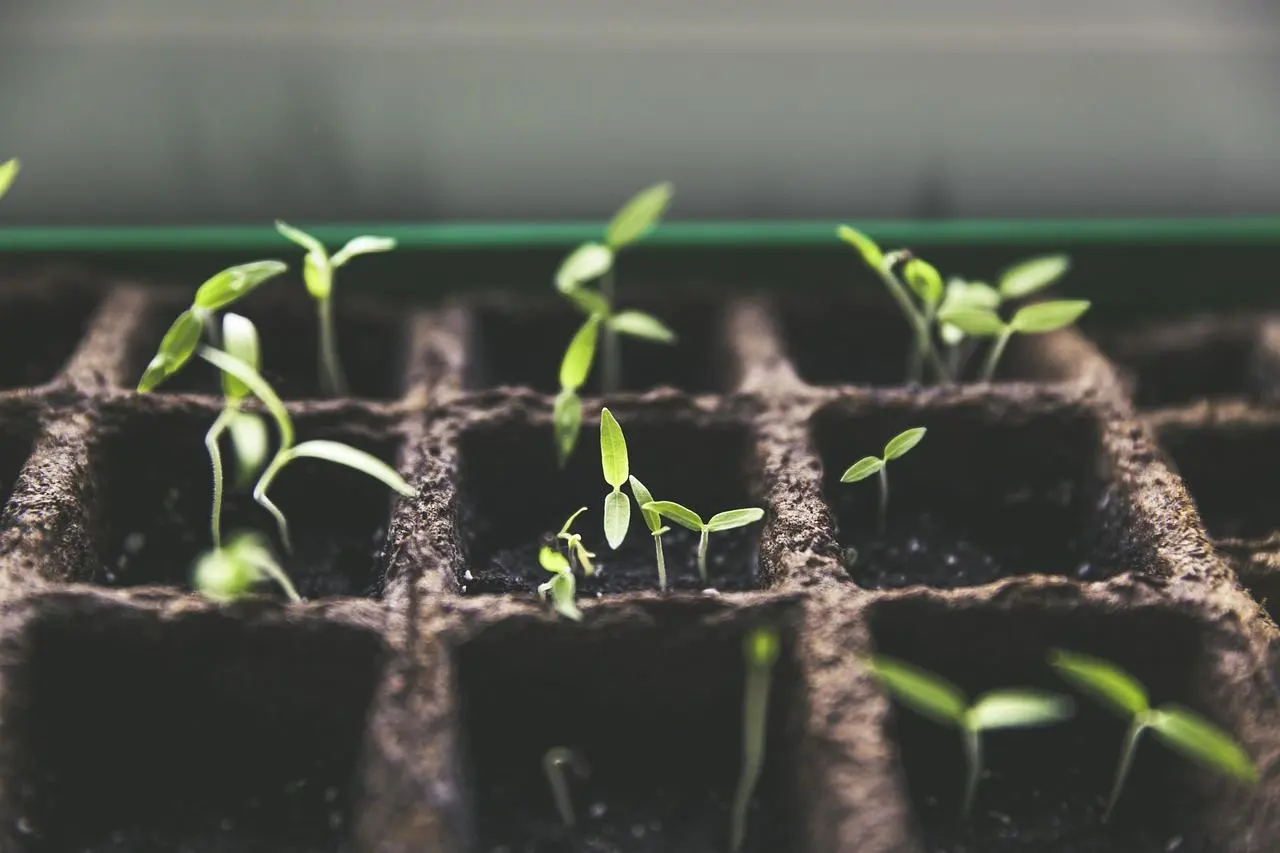
What do seedlings need after they sprout?
UConn says that once seedlings emerge you should remove the plastic and move them to a bright window with indirect light. If no bright window is available, CSU PlantTalk suggests hanging a fluorescent fixture three to four inches above the plants and keeping the lights on 12 to 16 hours daily.
Maryland Extension names broad-spectrum LED grow lights and cool-white fluorescent fixtures as good options for growing transplants indoors. You can read its guidance at University of Maryland Extension.
Day-to-day care comes down to a few habits:
- Let the mix dry slightly between waterings, but do not let seedlings wilt.
- Thin crowded seedlings by snipping extras at the soil line with scissors.
- Move seedlings into individual pots once they have one set of true leaves, if they outgrow their containers.
Many soilless mixes have little fertility, as Purdue Extension points out. If you feed seedlings, follow the product label and local extension guidance.
Hardening off and moving plants outdoors
Start hardening off about two weeks before transplanting, advises CSU PlantTalk. UConn describes placing plants outside in part shade, protected from wind, for about a week and bringing them in at night before temperatures drop.
Skipping this step can lead to sunburned, damaged leaves, UConn warns. Increase sun exposure gradually in the second week.
If your plants are headed for a raised bed vegetable garden, work backward from your last frost date so the hardening-off period fits before transplant day. While the seedlings toughen up, it is a good moment to read about companion planting vegetables and decide what will sit next to what.
Frequently asked questions
Is a heat mat necessary?
Show answer
Not for every seed. USU Extension describes a mat as useful mainly in a cool room or where night temperatures drop too low, and notes that lights placed within a few inches of the seeds may supply enough warmth.
Can I use seed left over from last year?
Show answer
Yes, if it was stored well. Maryland Extension says to use fresh or properly stored seed, and to keep surplus seed somewhere cool and dry, such as a refrigerator.
Is a sunny window enough light?
Show answer
Usually not. Maryland Extension says window light is seldom enough for strong seedling growth, and that acceptable growth usually happens only in south-facing bay windows or sun rooms with ample direct sunlight.
Why start seeds indoors at all?
Show answer
Purdue Extension says vigorous transplants flower sooner and give an earlier harvest than plants started directly outdoors. You can also grow cultivars your local nurseries may not stock as transplants.
What is damping off?
Show answer
It is a fungus that attacks weak seedlings. CSU PlantTalk links it to too much moisture, high temperatures and poor light, so keep the mix damp rather than soaked and give seedlings good light.